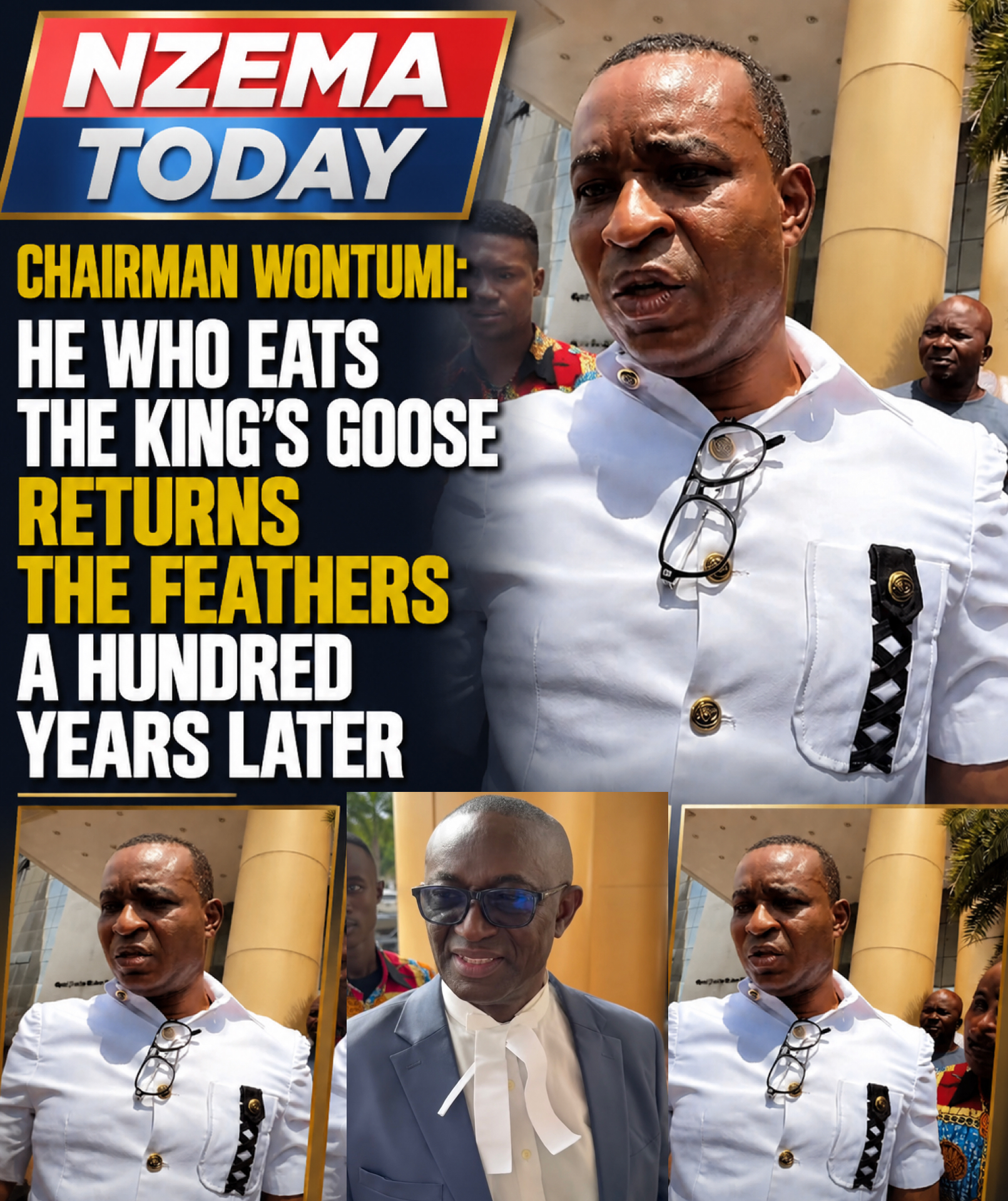
They say history has a long memory. It recalls the actions of those in power and does not forget the traces left by those who once moved boldly through the corridors of influence. In the current legal and political situation surrounding Bernard Antwi-Boasiako, known as Chairman Wontumi, Ghana is witnessing a modern political adage in action that he who takes from the king will return the feathers a hundred years later.
Chairman Wontumi, who serves as the Ashanti Regional Chairman of the New Patriotic Party (NPP), was once seen as a beacon of political confidence, influence, and unwavering grassroots support. His ascent in Ghana’s political arena was characterized by assertive speeches, business growth, and a strong presence in both party operations and the mining industry. However, his empire is now facing scrutiny in the courts, as accusations related to illegal mining and financial misconduct take center stage in national news.
The recent developments in his legal challenges have captured the public’s attention. In one of the cases involving alleged illegal mining activities at Samreboi, his legal team has become part of the unfolding drama. His lawyer, Andy Appiah-Kubi, has withdrawn from some segments of the case, citing profound dissatisfaction with how the proceedings are being conducted and the court’s handling of the situation, even as he remains involved in other areas of representation.
The courtroom drama continues to unfold instead of coming to a close. A recent request from a co-defendant’s legal team to withdraw from the case was rejected by the court, indicating that the judicial process is tightening its grip. While these procedural disputes may seem technical, they highlight the growing complexity and gravity of the situation involving Chairman Wontumi.
The case is far from over, with the court set to deliver its ruling on July 3, a date that all parties and the public are eagerly awaiting as they follow the unfolding legal and political saga. However, beyond the headlines and legal documents, there is a deeper moral and political insight to consider. In Ghana, as in many other places, power tends to cycle. Those who rise quickly through political and economic systems may eventually find themselves facing the very structures they once navigated with ease. The saying “eating the king’s goose” highlights the privileges and benefits that come from being close to power. Meanwhile, the return of the feathers “a hundred years later” symbolizes accountability often delayed, but rarely avoided.
Chairman Wontumi’s case has reached a point where it is no longer solely about legal issues or party dynamics. It has become a broader discussion on governance, accountability, and the persistent tension between power and its effects in Ghanaian public affairs. Whether he comes out on top or faces further restrictions from the courts, this ongoing saga continues to attract significant national interest.
By Nzema Today